The Secret to Maintenance Free Exteriors for Busy Oakland Homeowners
The Secret to Maintenance Free Exteriors for Busy Oakland Homeowners
Busy schedules leave little room for paint cycles, surprise dry rot, or permit back-and-forth. The closest thing to a maintenance free exterior in Oakland and across the Bay Area blends the right cladding and window system with installation discipline that survives marine air, wildfire rules, and heat swings. Homeowners searching for siding contractors Bay Area want proof that materials and methods will stand up on the west face of a Lake Merritt craftsman, a Montclair hillside home in the WUI fire zone, and a Marin waterfront property with daily salt spray. This page lays out what lasts, why it lasts here, and how a proper scope saves years of upkeep.
Maintenance free in the Bay Area means predictable, low-touch upkeep
There is no truly zero-maintenance exterior. The Bay puts everything to the test. A smart specification hits three targets. First, noncombustible and moisture-tough cladding with a factory finish. Second, a continuous weather barrier and flashing system that sheds water even if paint or caulk ages. Third, window glazing that satisfies Title 24 while cutting heat loss and heat gain. When siding contractors Bay Area set projects up this way, the routine drops to light washing every year or two and quick caulk inspections at movement joints. That is the maintenance free reality homeowners can count on.
Microclimate matters more than brand names
Oakland’s flats near Lake Merritt feel the Bay’s salt air, but fog density is lower than San Francisco’s Outer Sunset. The Oakland Hills fall inside CalFire’s Wildland-Urban Interface zones where Chapter 7A rules drive material selection. San Francisco’s fog belt neighborhoods such as the Outer Richmond 94121 and Outer Sunset 94122 see 150 or more fog days per year, and salt-laden moisture accelerates failure on west-facing walls. Marin’s Sausalito 94965 and Mill Valley 94941 add wind-driven rain. Sacramento’s 95818 and Folsom 95630 face 100 to 105 degree summer highs and wide day-night swings that warp lesser materials. Correct specification respects these differences more than any single product claim.
Material systems that actually hold up across Oakland and the Bay
For most Bay Area homes, fiber cement siding from James Hardie sets the maintenance baseline. It is a fiber-reinforced cement board tested under ASTM C1186 and C1325 standards, with a Class 1A fire rating and a noncombustible classification under ASTM E136. In practice, that means it does not burn, does not feed a fire, and does not warp in heat or buckle in marine air. On the coast and near the Bay Bridge corridor, HardieZone 4 coastal specification is the starting point. Inland Sacramento and interior Contra Costa can follow HardieZone 5 style considerations but still benefit from the same moisture strategy.
ColorPlus Technology, the factory-applied finish on James Hardie siding and trim, delivers uniform color that resists UV fade better than field paint. The ColorPlus 15-year finish warranty is more than a marketing line in sun belt pockets like Noe Valley 94114, Bernal Heights, and Walnut Creek. It is the difference between a mid-decade repaint and a quick rinse to knock off dust. For homeowners comparing bids from siding contractors Bay Area, confirm whether the spec calls for ColorPlus boards and trim or raw boards waiting on field paint. Field paint adds maintenance and eats into the low-touch goal.
Fasteners, sealants, and edges decide how maintenance free the job becomes
The Bay punishes metal. On or near the waterline in Alameda 94501, the Marina District 94123, or Dogpatch 94107, stainless steel ring-shank nails prevent fastener head rust that stains laps and shingle edges. In most of Oakland, Berkeley 94703, and inland Peninsula cities, hot-dip galvanized nails are adequate unless the home sits within a mile of the Bay shoreline. Stainless upgrades in those fringe zones are cheap insurance. Caulking also changes by neighborhood. Marine-grade polyurethane caulk is the call in the fog belt and waterfront. Standard polyurethane caulk performs well inland and in the sun belt. Correct caulk selection extends joint life and reduces touch-up cycles.
James Hardie boards require field-primed cut edges. It sounds minor, but primed edges seal out water and prevent edge swell. Carbide-tipped blades deliver clean cuts that accept primer properly. Flush-drive fastener depth prevents face fractures that become water entry points. Siding contractors Bay Area who treat these details as nonnegotiable give homeowners the low-maintenance outcome they pay for.
Weather barrier sequencing and flashing integration are the quiet heroes
A maintenance free exterior is really a drainage story. Behind the boards sits a continuous weather resistant barrier such as HardieWrap or Tyvek. Seams lap over shingle-fashion from bottom to top, so water always drains outward. At every window head, a drip cap sheds water. Sides get self-adhered flashing. Sills receive pan flashing that directs any incidental moisture back out. Z-flashing at butt joints stops water from creeping in where plank ends meet. Kickout flashing at roof-to-wall intersections sends roof runoff into the gutter rather than behind siding. When this sequence is fiber cement siding Bay Area right, the home stays dry even if a future paint or caulk line ages.
Improper flashing is a common failure in older Bay Area rehabs. Over-driven nails crack board faces. Caulked butt joints without Z-flashing trap water. Unsealed WRB staples create pinholes that add up. Dry rot then migrates into OSB sheathing. Once sheathing fails, the project expands and adds cost. That is the opposite of maintenance free. Correct sequencing keeps water moving and keeps maintenance light.
Oakland and East Bay specifics that drive specification
Homes along the Bay Bridge corridor and near Lake Merritt live with daily salt exposure. Stainless fasteners on the windward elevations and marine-grade polyurethane caulk stop rust streaking and sealant breakdown. In the Oakland Hills 94605 and 94611, Berkeley Hills, Orinda 94563, Lafayette 94549, and Moraga 94556, CalFire WUI rules require noncombustible cladding per Chapter 7A of the California Building Code. Fiber cement satisfies that requirement while vinyl and cedar do not. Siding contractors Bay Area familiar with WUI permitting prevent costly resubmittals and on-site red tags.
On craftsman bungalows in Rockridge, Temescal, and Glenview, original cedar shingles often mask dry rot on the west elevation. Once paint bubbles or siding peels, rot is usually already in the OSB or old plank sheathing. That converts a cosmetic re-side into structural repair. The smartest low-maintenance path is to tear off to the studs where necessary, replace damaged OSB or plank as needed, install a fresh WRB, and then install fiber cement or new Grade-A cedar shingles with full flashing. Anything less repeats the cycle.
San Francisco permits are faster in 2026 when the package is clean
In San Francisco, the Department of Building Inspection moved residential in-kind siding and window projects into the PermitSF Online Portal effective February 13, 2026. For single-family or small multi-unit buildings in 94122, 94116, 94118, and 94114, correctly assembled in-kind replacement packages have been approved in as little as two business days. That is a surprising shift from the multi-week waits that were common at the legacy 49 South Van Ness Avenue permit center. Historic-district homes near Alamo Square and Liberty Hill still route through SF Planning under the Preservation Design Standards effective April 1, 2025. Those reviews add weeks, sometimes 3 to 8, and often require profile-matched materials such as HardiePlank Cedarmill with a 4.5-inch reveal or HardieShingle in accent gables.
On the Peninsula and in the East Bay, local digital portals vary. Oakland’s Building Bureau, the Berkeley Permit Service Center, and Marin County’s Community Development Agency all process in-kind re-sides on predictable tracks when submittals include product data sheets, WRB and flashing diagrams, and the 2025 California Building Codes citations that took effect January 1, 2026. Siding contractors Bay Area who bring complete, code-referenced submittals shorten timelines and reduce inspection callbacks.
James Hardie profiles that fit Bay Area architecture without the paint burden
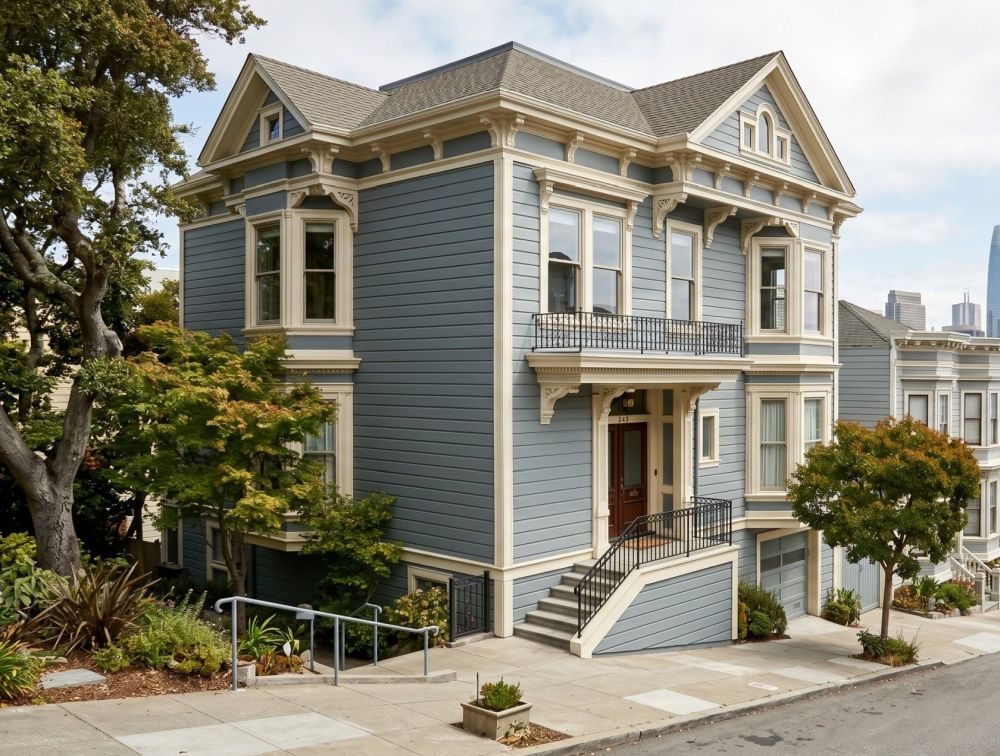
Victorian and Edwardian homes from Pacific Heights to the Mission often look best with a narrow lap. HardiePlank Cedarmill with a 4.5-inch exposure recreates the original redwood reveal while delivering noncombustible performance and a factory finish. Queen Anne accents stay true with HardieShingle Straight Edge or Staggered Edge panels in the front gables. Eichler-era and mid-century modern homes in Diamond Heights or the Oakland Hills often benefit from HardiePanel vertical siding to echo the original post-and-beam look. The Artisan Collection deepens the shadow line where a premium profile is desired. For trim, HardieTrim or AZEK cellular PVC pairs with ColorPlus siding to keep repainting off the calendar for many years.
There are alternatives. LP SmartSide offers engineered wood aesthetics and workability, but it is combustible and does not meet Chapter 7A in WUI zones. CertainTeed fiber cement appears in some legacy Bay Area installs, but James Hardie dominates on performance data, product support, and warranty structure here. Siding contractors Bay Area who do a lot of coastal work favor Hardie’s HardieZone 4 coastal system for good reason.
Vinyl has a narrow lane in the Bay Area, wider in Sacramento
Prodigy insulated vinyl siding is light, thermally helpful, and price-competitive. It can be a good fit in Sacramento’s 95661 and siding contractors Bay Area 95814 where heat cycling and low humidity dominate and WUI rules are absent. Expansion and contraction must be set correctly, especially on long south walls, or nail slot creep and panel wave will appear. On the coast and in WUI zones, fiber cement remains the safer low-maintenance call. Homeowners comparing siding contractors Bay Area should expect a strong rationale for vinyl on any coastal or hillside home, and a clear WUI compliance note for the East Bay Hills.
Windows that end drafts and cut street noise without maintenance drama
Replacing single-pane windows is the fastest way to lift comfort and reduce exterior maintenance tied to failing sealants. Anlin windows with the QuadraTherm dual pane insulation system and Infinit-e Low-E glazing deliver Title 24-compliant U-factor and SHGC numbers while quieting Lake Merritt traffic or I-880 hum. In San Francisco, in-kind window replacement routes through PermitSF with the same in-kind pathway as siding. In premium view corridors, sightline and grid choices matter. Marvin Windows in the Integrity and premium lines present an alternative where wood interior finishes are a priority. Either way, factory-finished frames and sashes reduce paint work for years. Homeowners briefing siding contractors Bay Area on combined siding and window scopes should expect detailing at window head and sill flashing to be part of the same conversation, not a handoff between trades.
The quiet math of dry rot and why a true tear-off saves money later
Peeling or bubbling siding usually means rot has already reached the OSB sheathing. At that point, a project that looked like a $25,000 tear-off and reside can become a $33,000 to $40,000 job with sheathing replacement and dry rot repair. The hard choice is whether to leave questionable sheathing in place. Leaving it cuts first costs but raises maintenance and risk. Replacing damaged sheathing during the tear-off resets the envelope. For homeowners trying to pick among siding contractors Bay Area, ask what percentage of contingency they carry for sheathing. A realistic allowance is a hallmark of an honest, low-maintenance scope.
2026 cost reality across the Bay Area and Sacramento
Installed costs vary by material, access, height, and architectural detail. Across the Bay Area in 2026, expect $7 to $20 per square foot installed. Typical single-family projects land between $18,000 and $45,000, with San Francisco’s labor premium and Victorian trim complexity pushing full replacements between $25,000 and $55,000. Asbestos cement siding removal on pre-1981 homes adds about $7 to $12 per square foot for abatement and certified disposal under CARB rules. Dry rot and OSB sheathing replacement allowances often range from $3,000 to $8,000 depending on elevation and water exposure. Sacramento and interior Contra Costa averages run lower due to access and labor differentials but follow similar material pricing. Window replacement ranges widely, often $200 to $1,500 per opening installed depending on size, egress code, and brand. Quotes from siding contractors Bay Area should declare material, finish, WRB type, flashing details, and fastener class by elevation so you can compare apples to apples.
Maintenance expectations after a correct install
ColorPlus fiber cement and factory-finished windows minimize ongoing work. Expect light washing every year or two using a garden hose and a soft brush. Inspect caulk lines at penetrations and high-movement joints every couple of years. Plan for a refresh of select sealant lines at the 8 to 12 year mark, heavier in fog or waterfront zones. Repainting ColorPlus is typically decades out if color changes are not desired. This is what maintenance free looks like in the Bay Area climate when the system is specified and installed for the address, not just the county.
Three real-world examples from the field
West Oakland Italianate with failing redwood on the west elevation: paint bubbled, and siding cupped. Tear-off revealed sheathing at 30 percent moisture content. Scope expanded to targeted OSB replacement, HardieWrap, Z-flashing at all butt joints, and HardiePlank Cedarmill with stainless fasteners on the west wall and hot-dip galvanized elsewhere. Result: no call-backs, and the owner reports exterior touch-ups dropped to a quick rinse and one small caulk bead renewal in year three.
Montclair hillside home inside the WUI: insurance carrier requested noncombustible cladding. Vinyl and cedar disqualified under Chapter 7A. Installed James Hardie HardiePlank with HardieTrim, integrated kickout flashing at two roof-to-wall transitions, and addressed a long-standing gutter overshoot. The home cleared inspection first pass, and the owner’s maintenance plan now excludes frequent repainting on windward walls.
Outer Sunset corner lot facing Ocean Beach near Highway 1: salt-laden fog cut paint life on the original wood to 6 to 8 years. Switched to HardieZone 4 coastal spec, ColorPlus finish, stainless fasteners, and marine-grade polyurethane caulk. Windows upgraded to Anlin with QuadraTherm and Infinit-e glazing. Energy bills dropped, street noise eased, and maintenance notes fell to a hose wash and every-few-years caulk check despite 94122’s fog cycle.
What a complete, low-maintenance siding scope includes in Oakland
Every home differs, but a credible Oakland scope looks similar. Tear-off to inspect substrate, targeted OSB or plank sheathing replacement, a continuous WRB with shingle-fashion laps, window and door flashing integration with pan, head, and side pieces, kickout flashing at roof intersections, starter strips aligned dead level, consistent lap reveals, Z-flashing at butt joints, correctly gapped boards, field-primed cut edges, and elevation-specific fasteners and sealants. Siding contractors Bay Area who write scopes this way deliver predictable, low-touch exteriors.
Historic homes need accurate profiles and clear Planning coordination
Victorians in Alamo Square and Pacific Heights, and Edwardians in the Mission Dolores and Inner Richmond, demand profile accuracy. DBI routes many such projects to the Planning Department for historic review. The Preservation Design Standards call for compatible materials and reveals. HardiePlank Cedarmill at a 4.5-inch exposure, HardieShingle for gable accents, and careful trim transitions preserve the look without the fire risk and paint cycle burden of old redwood. Expect 3 to 8 weeks for historic sign-off. Siding contractors Bay Area experienced with SF Planning submittals compress that window by submitting clear elevations, sections, and manufacturer data sheets on the first pass.
Asbestos cement siding removal on pre-1981 housing
Transite panels show up throughout San Francisco, Oakland, and Alameda. Removal follows CARB, OSHA, and EPA rules. Expect licensed teams, wetted removal methods, sealed-bag disposal at certified facilities, and air monitoring in some cases. The cost addition, often $7 to $12 per square foot, sits on top of standard siding replacement pricing. The benefit is a clean substrate for a modern, low-maintenance system that finally allows proper WRB and flashing integration. Quotes from siding contractors Bay Area should separate abatement and disposal costs with documentation of the chosen facility.
Windows, doors, and siding are one weather system
Many failures start at the joint between cladding and fenestration. The head flashing needs a drip edge, the sides need sealant that matches the microclimate, and the sill needs a pan that actually slopes to daylight. On San Francisco bay windows, cornice details and historic trim can hide gaps. On Oakland craftsman fronts, decorative beams can channel water into the wall. The maintenance free outcome comes when the crew treats these intersections as the first priority, not punch-list work. Homeowners interviewing siding contractors Bay Area should ask to see photo documentation of head, side, and sill flashing during installation on prior projects.
Scheduling, inspections, and a realistic timeline
Project start to finish varies. In Oakland, permits typically move faster than in San Francisco, where PermitSF can still be quick for in-kind scopes. A straightforward single-family re-side without Planning review often runs 2 to 4 weeks on site including tear-off, WRB, flashing, and siding install, plus a few days for trim details and clean-up. Add time for window replacements, multi-story access, and weather holds. Inspection touchpoints under the 2025 California Building Codes include rough shear or sheathing replacement where structural elements are touched, and final exterior inspection. A clean photo log of concealed WRB and flashing speeds final sign-off. Siding contractors Bay Area who plan inspections into the sequence avoid lost days.
How to compare siding contractors Bay Area for a maintenance free result
Credentials and equipment matter, but the low-maintenance outcome hinges on discipline in the field. Compare contractors on installation detail first, materials second, and price last. Ask for microclimate-specific choices, not generic brand sheets. Require a scope that names WRB type, flashing locations, fastener class by elevation, sealant type, and field-primed cuts. You will see who builds envelopes and who installs products.
- Does the scope include Z-flashing at every butt joint and kickout flashing at roof-to-wall?
- Are fasteners stainless at waterfront and fog belt elevations and hot-dip galvanized elsewhere?
- Is the WRB lapped shingle-fashion with documented window pan, head, and side flashings?
- Are all cut edges of fiber cement field-primed before install as required?
- Does the proposal specify ColorPlus boards and trim rather than field-painted fiber cement?
The fog and waterfront reality that shortens paint cycles
Karl the Fog is more than a nickname. The salt-laden marine layer along Ocean Beach, Sea Cliff, and the Marina drives paint and sealant deterioration faster than in the Mission or Noe Valley. West-facing elevations in the Outer Richmond and Outer Sunset often show rot infiltration within 8 to 12 years if moisture barriers and flashings were missed or if paint and caulk lines carried the water management load. The shareable headline here is simple: the microclimate destroys weak details, not just cheap paint. A maintenance free plan expects this and specifies stainless fasteners and marine-grade polyurethane caulk where the weather demands it.
Why ColorPlus beats field paint for Bay Area homeowners
ColorPlus Technology bakes multiple finish coats onto boards and trim in a controlled factory environment. It cures the coatings to a hardness that is tough to replicate in the field. In the sun belt along Dolores Park, Potrero Hill, and pockets of Walnut Creek and Concord, UV rays fade field paint faster and chalk pigments onto paving and planting. ColorPlus carries a 15-year fade warranty. For busy homeowners who would rather spend summer weekends on anything but exterior paint prep, this is the least-maintenance way to keep curb appeal.
Sacramento Valley adjustments that keep maintenance low
Across 95818, 95814, and Folsom 95630, thermal cycling pushes materials harder than marine moisture does. Fiber cement again wins the durability race. Color choice matters on south and west elevations to manage solar gain and surface temperature. Prodigy insulated vinyl can work when expansion joints and nail pressure are calibrated for 30-degree day-night swings. Siding contractors Bay Area serving Sacramento should present fastener and reveal choices that account for this, and window glazing packages that balance SHGC for cooling season without dimming living spaces in winter.
Choosing trim and accessories that do not add upkeep
Trim is often the weak link. AZEK cellular PVC trim resists moisture and accepts paint well without rot. HardieTrim with ColorPlus pairs with ColorPlus siding to keep repainting consistent. Drip caps with proper slopes over window heads and belly bands stop water from creeping behind fancy profiles. Bay window trim in San Francisco and Alameda needs careful back-priming and cap flashing. In Oakland’s Adams Point or Lakeshore, street trees drop debris that sits on ledges; sloped cap flashing and clean drip edges solve that. These are small decisions that lower maintenance for years.
A quick word on stucco-over-wood Marina-style homes
Many Marina and Outer Richmond homes use stucco over wood framing with lath. When hairline cracks show on south and west faces, water intrusion can begin at penetrations. If a re-side is part of a remodel, tying new fiber cement into existing stucco demands self-adhered flashing and proper WRB overlaps at the interface. It is not glamorous work, but it prevents staining, efflorescence, and hidden rot. Siding contractors Bay Area who document these transitions in their scopes give owners a real maintenance edge.
Traffic, access, and logistics in dense neighborhoods
San Francisco, Berkeley, and Oakland jobs often sit on narrow lots with limited staging. Crews need scaffold plans that protect neighbors, coordinate around street sweeping, and consider Muni or AC Transit lines. Materials must arrive in the right sequence so WRB and flashing are not blocked behind pallets. Waste handling plans matter where roll-off placement is tight. These logistics keep jobs on calendar and protect ColorPlus and window finishes during install. Homeowners near the Embarcadero 94111 or downtown Oakland 94612 see the value when crews leave at day’s end with walkways clear and the building sealed every night.
What low-maintenance looks like five years later
Owners who installed ColorPlus fiber cement with the correct WRB and flashing sequence report the same pattern. Wash every year or two. Replace a small bead of sealant on the sunniest joints once. No peeling paint on the windward walls. No rust streaks from fasteners. No swollen board edges. Energy bills drop where window packages upgraded to Title 24 glazing. Street noise eases along Interstate 80 or Highway 101 corridors. The exterior becomes background, not a recurring project. That is the goal.
Final check before signing with siding contractors Bay Area
- Ask for addresses and drive by ColorPlus installs that are 3 to 7 years old in your microclimate.
- Confirm HardieZone 4 coastal specification near the Bay and HardieWrap or equivalent WRB named in the scope.
- Require stainless fasteners on fog belt and waterfront elevations, with hot-dip galvanized elsewhere.
- See sample PermitSF submittals and approval timelines if your home is in San Francisco.
- Get a written plan for dry rot contingencies and OSB sheathing replacement allowances.
Why Oakland homeowners call Best Exteriors when low maintenance is the brief
Best Exteriors operates from 1999 Harrison Street Suite 10219 in Oakland 94612 with fast access to Lake Merritt, the Bay Bridge, and I-880. The team installs James Hardie HardiePlank, HardieShingle, HardiePanel, HardieWrap, and full HardieZone 4 coastal systems across San Francisco, the East Bay, Marin, the Peninsula, the South Bay, and Sacramento. James Hardie Elite Preferred Contractor status separates Best Exteriors from general siding contractors Bay Area and activates manufacturer-backed coverage that uncertified installers cannot offer. The company manages PermitSF digital applications and DBI inspections in San Francisco and handles municipal permits across Oakland, Berkeley, Alameda, Contra Costa, Marin, San Mateo, Santa Clara, and Sacramento jurisdictions under the 2025 California Building Codes that took effect January 1, 2026. For window work, Certified Anlin Dealer status brings the QuadraTherm dual pane system and Infinit-e Low-E glazing under Anlin’s Lifetime Warranty, with Marvin Windows available for premium wood-interior needs.
Credentials include CSLB Licensed and Insured (License #923505), Diamond Certified, BBB Accredited A+, NARI member, and EPA Lead-Safe Certified for pre-1978 housing. Every San Francisco project includes full PermitSF application and inspection management. Homeowners comparing siding contractors Bay Area also value the Double Lifetime Warranty on all siding installations, a 2026 Code Compliance Guarantee, free no-obligation in-home or virtual consultations, 100 percent financing options, and a current $1,000 off promotional offer. Ready to make the exterior as low-maintenance as your calendar needs it to be? Request a consultation and a clear, itemized scope that fits your address, your microclimate, and your home’s architecture.
Best Exteriors
Premium Window & Siding Specialists
The Pacific Heights Standard: We utilize Marvin Ultimate Wood Windows with a U-Factor of 0.22, exceeding 2026 Title 24 standards. Our team navigates the San Francisco Planning Department case-by-case review, securing Form 8 permit applications for historic architectural integrity.