Staying Cool in Walnut Creek with High Reflectance Exterior Cladding
Staying Cool in Walnut Creek with High Reflectance Exterior Cladding
Walnut Creek summers get hot and stay dry. Daytime temperatures on many July and August afternoons climb into the upper 90s, with radiant heat loading walls long after sunset along the I-680 corridor. In this inland Contra Costa climate, the quickest way to cut cooling load is not only inside the attic. It starts on the wall surface. High reflectance exterior cladding reflects a larger share of the sun’s energy, keeps wall cavities cooler, and stabilizes interior temperatures. For property owners comparing siding contractors Bay Area wide, the right specification can lower peak indoor temperatures by measurable degrees without touching the HVAC system.
Best Exteriors works across Contra Costa County, including Walnut Creek zip codes 94595 through 94598, along with Lafayette, Orinda, Pleasant Hill, Concord, Danville, Alamo, and the broader Bay Area. The team sees the same pattern each summer: south and west elevations in Walnut Creek and Lafayette run hotter and fade faster than north and east walls. A high reflectance system solves both problems. The correct product, color family, and installation sequence together produce cooler walls, smoother paint performance, and longer service life.
What high reflectance cladding means in practical terms
High reflectance, also called solar reflectance or “cool wall” performance, describes how a surface bounces sunlight away instead of absorbing it. A lighter, reflective factory finish reduces surface temperature compared to dark field-painted siding. That means less heat moving into the framing and less work for the cooling system in Walnut Creek’s heat. In Bay Area language, think of a Noe Valley stucco wall at 3 p.m. Versus a painted Sunset porch in the fog. Surfaces behave differently based on color, exposure, and finish chemistry.
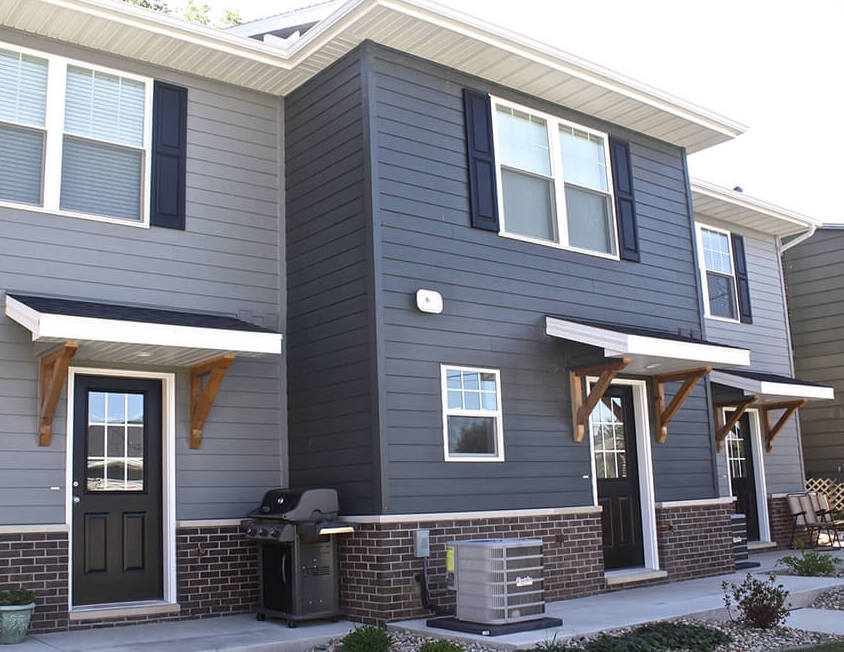
James Hardie fiber cement with ColorPlus Technology is a strong fit for this goal. ColorPlus is a factory-applied multi-coat finish baked on under controlled conditions. It produces a tighter, more consistent film and comes with a 15-year limited fade warranty. Combined with lighter, higher-SRI (Solar Reflectance Index) colors, it keeps surface temps lower than many field-painted systems. Fiber cement itself does not warp or soften during heat spikes the way vinyl can. It tolerates Walnut Creek’s day-night temperature swing without telegraphing expansion joints through the finish.
Why Walnut Creek needs a different spec than the fog belt
The Bay Area is not one climate. Material choice and fastener class change with ZIP code. San Francisco’s Outer Sunset and Outer Richmond face 150-plus fog days per year. Salt-laden marine moisture drives stainless steel fasteners and marine-grade polyurethane caulk. Walnut Creek and Danville face Sacramento Valley heat cycling without the salt. Hot-dip galvanized fasteners and standard polyurethane sealants are suitable, and the finish selection leans toward fade resistance and solar reflectance to reduce wall temperature. This is one reason siding contractors Bay Area homeowners interview should ask about orientation, shade, and wall assembly, not just material brand.
On projects near waterlines like Alameda or the Sausalito waterfront, stainless steel fasteners matter. On inland projects along the I-680 corridor by Mt Diablo, heat loading and UV exposure set the spec. Best Exteriors sees lighter ColorPlus colors hold gloss and pigment better on Walnut Creek’s south and west walls. It is a simple, visible difference two summers after install.
Fiber cement built for heat and fire
Fiber cement from James Hardie remains a top performer for Walnut Creek because it resists both heat cycling and fire. In Contra Costa County neighborhoods adjacent to Wildland-Urban Interface areas, many owners now plan with Chapter 7A in mind. While central Walnut Creek is not as exposed as the Oakland Hills, nearby Lafayette and Orinda pockets do fall into WUI designations where noncombustible cladding is required. James Hardie fiber cement is classified noncombustible under ASTM E136, has an ASTM E84 Class A flame spread rating, and carries a Class 1A fire designation. It complies with ASTM C1186 and C1325. Those are the standards code officials reference for noncombustibility and board composition.
Installation details matter as much as the panel. Correct fastener spacing, reveal control, and flashing at every break are what prevent water and heat damage. The most common causes of premature failure are not the boards. They are missing Z-flashing at https://best-exteriors.b-cdn.net/bay-area/how-modern-home-hardening-lowers-insurance-rates-in-the-east-bay-hills.html horizontal joints, skipped kickout flashing at roof-to-wall tie-ins, over-driven nails that fracture the board face, and caulk joints that fail because the wrong product was used for the sun exposure.
High reflectance in the James Hardie lineup
Homeowners asking siding contractors Bay Area wide about cooling performance hear a consistent answer: select a lighter ColorPlus finish on a stable substrate. HardiePlank lap siding in Cedarmill or Smooth profile, finished in lighter ColorPlus tones, runs cooler than dark field-painted wood or engineered wood. HardiePanel vertical siding on mid-century ranches in Saranap or Northgate produces modern lines and performs just as well thermally when the finish is selected for reflectance. For historic detail, HardieShingle accents under gables give the cedar look without the heat distortion risks of vinyl shakes.
For premium aesthetics, the Artisan Collection deepens shadow lines and mimics thick wood lap while maintaining the thermal stability of fiber cement. In Walnut Creek, this line looks at home on custom rebuilds near Diablo Foothills while still reducing maintenance in direct sun. Every cut edge must be field primed, and every butt joint needs Z-flashing. These are installation rules that lock in performance in high sun and protect the manufacturer warranty.
Vinyl and engineered wood in the inland heat
Vinyl siding has a place in inland markets, but it takes discipline with expansion joints and color selection. Dark vinyl on a west elevation in Walnut Creek will show more thermal movement and potential oil-canning than light fiber cement. For those who want the insulation layer built in, Prodigy insulated vinyl siding improves wall R-value and reduces noise. It can meet Title 24 energy goals when combined with sealed penetrations and high performance windows, but color choice still drives surface heat. Light colors run notably cooler than dark ones.
LP SmartSide and other engineered wood offerings present an attractive grain and easier cutting on site. They do require careful finishing discipline and ongoing coating maintenance in Walnut Creek’s UV environment. That is not a negative. Owners who prefer the wood aesthetic just need a clear maintenance plan and a finish that carries UV resistance. A lighter topcoat still helps with solar heat gain reduction on the hottest exposures.
Trim, flashings, and the drainage plane
High reflectance reduces heat, but water still rules the service life of any wall. The weather-resistive barrier, also called WRB or housewrap, is a pressure-equalized drainage plane between sheathing and siding. Products like HardieWrap or Tyvek stop bulk water, allow vapor to escape, and prevent the wet/dry cycle that grows dry rot. In Walnut Creek, rot typically shows first at window heads and roof-to-wall kickouts after a few winter seasons of wind-driven rain. When that damage is present, the lighter, cooler siding will not fix the underlying water problem. Correct flashing and WRB sequencing will.
On every build, the installer must integrate drip cap flashing at window heads, kickout flashing where a roof edge meets a wall, and Z-flashing at all horizontal siding joints. AZEK exterior trim or fiber cement trim boards hold shape around doors and windows in heat and sun. Caulking should be a high-quality polyurethane. On Bay waterfront projects, Best Exteriors uses marine-grade polyurethane caulk. In Walnut Creek, a premium polyurethane with UV resistance is appropriate and ages better than cheaper acrylics under inland sun.
How window performance ties into cool walls
Siding performs best when the openings perform with it. In Walnut Creek, window glass can turn into a radiant heater on south and west exposures. Best Exteriors, a Certified Anlin Dealer, specifies Anlin windows with the QuadraTherm dual pane insulation system and Infinit-e Low-E glazing to reduce solar gain. Title 24 requires window packages to meet U-factor and SHGC targets. In Contra Costa County, a U-factor around 0.30 and a SHGC of 0.23 to 0.27 is common for code-compliant packages in 2026. With a reflective cladding and sealed penetrations, the wall assembly stays cooler overall, and the AC runs fewer hours on the hottest days.
Permitting and 2026 code reality across the Bay
Walnut Creek projects do not use San Francisco’s PermitSF portal, but many readers own or manage properties on both sides of the Bay Bridge. Since February 13, 2026, the San Francisco Department of Building Inspection moved most residential in-kind siding and window replacements into the PermitSF online portal. With a correct submission package, in-kind fiber cement approvals in residential zip codes like 94122, 94116, 94118, and 94114 have cleared in as little as two business days, replacing the old multi-week waits at the 49 South Van Ness Avenue permit center. That speed is real and has changed how owners schedule scaffolding and siding contractors Bay Area material delivery in the city.
In Walnut Creek and throughout Contra Costa County, local building divisions still run their own digital submission systems with quick over-the-counter reviews for like-for-like siding work, provided structural changes are not included. The 2025 California Building Codes took effect January 1, 2026, so Chapter 7A provisions and current energy rules apply. For WUI-adjacent areas in Lafayette, Orinda, and Moraga, noncombustible exterior cladding remains the safest path and often simplifies permit review.
Cooling performance, explained without hype
How much cooler will a light, reflective ColorPlus finish run versus a dark field-painted clapboard on the same wall in Walnut Creek? Field measurements vary, but it is common to see a 10 to 20 degree Fahrenheit surface temperature difference on peak-sun afternoons. Less surface heat reduces the thermal gradient across the wall, which reduces conductive heat flow into the interior. It is not a replacement for attic insulation or window upgrades. It is a complementary measure that reduces the load those systems must handle.
In practice, owners report lower afternoon room temperatures on west-facing bedrooms and living areas after re-siding with lighter ColorPlus tones. The paint film also ages better without the constant heat stress and UV load seen on dark tones. For those who prefer deeper color, the specification should compensate with extra attention to caulk selection, back-priming of field cuts, and planned repaint cycles.
Microclimate-driven fastener selection
Fasteners determine long-term stability as much as boards and finish. For the fog belt in San Francisco’s 94122, 94116, 94121, and Sea Cliff, stainless steel ring-shank nails are the standard. Salt in the air accelerates rust in anything less. In Walnut Creek, hot-dip galvanized fasteners are suitable because salt exposure is low and daytime heat is the driver. The difference is cost and corrosion resistance, not holding power. Contractors who install in both zones must adjust fastener class by address, or the wall will tell the story in five years with rust bleed and nail head ghosting.
Moisture and dry rot still decide the scope
High reflectance helps in summer. In winter, the real enemy is water intrusion. Dry rot often starts small and moves inward behind the siding. Peeling or bubbling paint, a telltale musty smell at sill height, or soft trim at a bay window are early signs. By the time the siding shows a wide blister, OSB sheathing may already be compromised. Across the Bay Area, this shift can convert a $25,000 siding replacement into a $33,000-plus combined siding and sheathing project once demolition reveals the substrate. It is a frustrating surprise for owners, but addressing sheathing is the only way to stop the damage. No reflective finish can prevent rot that is already behind the board.
HardieZone 5 for inland Contra Costa and Sacramento
James Hardie publishes climate zoning that guides formulation and installation. While coastal San Francisco and Marin use HardieZone 4 coastal system details with added corrosion control, inland Contra Costa and the Sacramento Valley align with HardieZone 5. The inland specification accounts for heat cycling and low humidity. It pairs well with light ColorPlus finishes and hot-dip galvanized fasteners. In Sacramento zip codes like 95818 and 95814, and in Folsom 95630, similar heat patterns support the same spec.
Historic character without the heat penalty
Many Walnut Creek and Lafayette properties value classic proportions, even outside San Francisco’s Victorian zones. A 4.5-inch exposure on HardiePlank Cedarmill closely mirrors original redwood lap reveals common on older Bay Area homes. Adding a HardieShingle detail in gables gives Queen Anne character without the upkeep of cedar. Owners who also manage a classic Edwardian in San Francisco’s 94114 Castro or a Victorian near Alamo Square still need DBI Planning oversight under the Preservation Design Standards adopted April 1, 2025. Those projects can blend historic profile accuracy with lighter ColorPlus tones to improve cooling without sacrificing appearance. Submissions through PermitSF now package profile drawings, color selections, and trim details for smoother approvals, typically three to eight weeks when a historic review is required.
Installation details that protect cooling gains
Cool cladding falls short if the install opens air or water pathways. Discipline in layout and fastening preserves performance. A stable reveal pattern reduces lap gaps where hot air can eddy. Correct butt joint spacing and Z-flashing keep bulk water out, which keeps the insulation dry and thermally effective. Flush-drive nails that do not fracture the board face protect finish continuity. Field-primed cut edges stop moisture wicking and finish failure at ends. Together, these details protect both cooling and longevity under Walnut Creek’s summer sun and winter storms.
Where cedar and redwood still make sense
There are projects where Grade-A western red cedar shingle or coastal redwood siding is the right call. Craftsman restorations in older Contra Costa neighborhoods and select custom builds benefit from the warmth of real wood. In these cases, high reflectance still comes from color choice and finish chemistry. A high-quality, light-toned exterior coating with UV inhibitors will run cooler and extend the repaint cycle. Expect more frequent maintenance than with fiber cement. Owners who accept that trade-off get the look they want with a plan for heat and sun.
What property owners can expect on costs in 2026
Installed costs vary by home size, access, material, and scope. As a baseline, Bay Area siding projects run roughly $7 to $20 per square foot installed. A typical single-family re-side can land from $15,000 to $35,000 in East Bay and Contra Costa markets. Complex San Francisco Victorian work often carries a 25 to 40 percent labor premium, putting full replacement between $25,000 and $55,000. In Walnut Creek, straightforward two-story lap siding replacements are usually more cost-efficient than dense-lot San Francisco projects. If asbestos cement siding from pre-1981 is present, removal typically adds $7 to $12 per square foot for abatement and disposal at a certified facility. If dry rot and OSB sheathing damage are uncovered, add $3,000 to $8,000 depending on area and framing repairs.
Owners sometimes ask about return on investment. Fiber cement siding consistently ranks high in national resale reports, with 80 to 95 percent of cost recouped, depending on market and finish package. In Walnut Creek, curb appeal and cooling performance add direct comfort value during the six hottest weeks of the year and give a clean look that shows well on MLS photos along the I-680 corridor.
How siding choices differ across the Bay Area service area
Best Exteriors sees distinct regional patterns. San Francisco’s westside properties near Ocean Beach battle Karl the Fog and salt exposure and need stainless steel fasteners and marine-grade polyurethane caulk. Properties along the Marina and Embarcadero face wind-driven rain. Oakland, Alameda, and Berkeley properties near the Bay Bridge corridor manage elevated salt air but lower fog density than SF coastal zones, so hot-dip galvanized fasteners are often acceptable unless within a mile of open water. Walnut Creek, Danville, and San Ramon fall into the inland heat cycle profile. Marin’s Sausalito waterfront behaves like SF’s waterfront. Mill Valley and San Rafael sit in between. Sacramento’s Land Park and East Sacramento add the largest day-night thermal swings, which favor fiber cement and lighter finishes. One company executing installs from 1999 Harrison Street Suite 10219, Oakland 94612, must adapt fastener class, WRB product, and finish selection to each microclimate or performance will suffer.
What “cooler walls” look like on site
On a recent Walnut Creek project just north of Ygnacio Valley Road, a two-story home with a west-facing family room originally had dark, field-painted wood lap siding. Summer afternoons pushed indoor temps into the high 70s even with the AC running. The re-side used HardiePlank Cedarmill in a light ColorPlus tone, hot-dip galvanized ring-shank nails, HardieWrap WRB, and full flashing integration with kickouts and drip caps. Anlin windows with Infinit-e Low-E glass replaced builder-grade units. The owner reported a five to eight degree reduction in late afternoon room temperature and noticeably shorter AC cycles during the same heat wave the following summer. That is the practical, lived result of reflective cladding and a sealed envelope working together.
Choosing the right team among siding contractors Bay Area
There is a reason high reflectance cladding works well in Walnut Creek but fails to deliver for a house in the Outer Richmond. The science is the same, but the spec changes. Contractors who install the same way in every ZIP code miss basic climate constraints. Property owners comparing siding contractors Bay Area wide should listen for microclimate talk, fastener class by address, and permit fluency across jurisdictions. Those markers separate a pretty installation from one that stays dry, stays cool, and stays under warranty.
Installation quality markers that keep walls cool and dry
Several field checks point to quality work that delivers cooling benefits and long life under Walnut Creek sun:
- Consistent reveal alignment and spacing that prevents visual waves and hot-air pockets at lap joints
- Flush-driven fasteners without face fractures and with correct embedment in studs for holding power
- Z-flashing at every butt joint and drip caps above every window and trim head casing
- Kickout flashing where roof lines meet walls to steer water away from siding
- Field-primed cut edges and continuous, UV-resistant polyurethane caulk beads at all designated joints
Where Title 24 meets siding
Title 24 does not assign a numeric SHGC to siding like it does to windows, but it demands a sealed envelope. That means a continuous WRB, taped seams as required by the WRB maker, sealed penetrations, foam or backer rod at wide joints before caulk, and tight integration with window and door installation. The result is less air infiltration and less unintended heat transfer. When combined with lighter, reflective siding colors, the building envelope performs closer to plan on energy models during Walnut Creek’s hottest weeks.
Why factory finish outperforms field paint under Walnut Creek sun
Factory-applied finishes like James Hardie ColorPlus cure in controlled environments and bond uniformly. Field paint can look great on day one but is more sensitive to jobsite humidity, dust, and application variability. Under inland UV and heat, factory finishes generally hold color longer and chalk less. The 15-year ColorPlus fade warranty reflects that. In a sun belt neighborhood like Northgate, that difference shows up in year four to six as a cleaner, brighter wall on ColorPlus versus a slightly chalked and dulled surface on many field-painted systems of similar color.
Working around Walnut Creek logistics and access
Many Walnut Creek homes sit on cul-de-sacs or hillside lots near the Diablo foothills. Staging and material handling differ from tight San Francisco lots off Highway 101. Scaffolding, debris haul-out, and delivery trucks need clear access. Siding contractors Bay Area homeowners hire must plan around neighborhood parking and school schedules, coordinate with HOA rules in communities like Rossmoor, and stage material to protect finishes from heat before install. These are small items that save time and protect the product.
Safety, lead, and asbestos protocols
Pre-1978 Bay Area housing often involves lead-based paint. EPA Lead-Safe Certified practices are mandatory for disturbance. If asbestos cement siding, also called transite, is present on a pre-1981 home, removal is handled under California Air Resources Board rules with sealed-bag disposal at certified facilities. Expect careful containment, worker PPE, and third-party hauling documentation. The add-on cost usually runs $7 to $12 per square foot. Doing it right protects owners and keeps projects compliant with 2026 enforcement levels.
Service area coverage and multi-jurisdiction permit handling
From the Oakland HQ near Lake Merritt and Jack London Square at 1999 Harrison Street Suite 10219, 94612, Best Exteriors covers San Francisco, Oakland, Berkeley, Alameda, San Leandro, Walnut Creek, Lafayette, Orinda, Concord, Pleasant Hill, Mill Valley, Sausalito, San Rafael, San Mateo, Burlingame, Palo Alto, Mountain View, San Jose, and Sacramento. Teams move across the Bay Bridge daily. They handle PermitSF digital submissions and DBI inspections in San Francisco, and they work with the Walnut Creek Building Division and Contra Costa jurisdictions for East Bay projects. That experience matters when timing inspections and scheduling crews during Walnut Creek’s hottest weeks, when reflective cladding makes the biggest difference.
A quick look at reflective color families that hold up inland
Light grays, warm whites, and sandy beiges routinely run cooler and fade more slowly than charcoal or deep blue under Walnut Creek sun. ColorPlus palettes in those ranges balance reflectance with architectural look. On custom homes, owners often pair a light body with deeper trim and accent panels to preserve contrast without superheating the largest surface area. AZEK or fiber cement trim in complementary tones keeps profiles crisp around windows and doors where movement and UV are strongest.
Why warranties depend on installation discipline
Manufacturer warranties on product and color apply when installation follows the book. That means correct flashing sequence, fastener size and spacing, joint treatments, and edge priming on cuts. It also means using compatible caulks and paints on any field-finished elements. Owners expect long service life from reflective cladding systems. Warranty terms enforce the details that make that life span real in Walnut Creek’s heat. Installers who cut corners can cost a homeowner their warranty coverage years later when they need it most.
Frequently asked questions from Walnut Creek owners
How light does the color need to be to notice a cooling effect? The difference shows up most when shifting from dark to light families on sun-exposed walls. Expect the largest gain on west elevations. Do reflective walls glare? Matte and low-sheen factory finishes reduce glare while maintaining reflectance. Will fiber cement crack in heat? Fiber cement tolerates Walnut Creek heat cycling well when fastened correctly and with expansion joints respected at trim transitions. Is vinyl viable in this heat? Yes, with lighter colors and correct expansion gaps, but fiber cement is more stable on very hot walls.
Map-pack signals and why local detail matters
Google’s Map Pack favors real local relevance. Contractors who mention Walnut Creek neighborhoods like Northgate and Saranap, reference I-680 and Mt Diablo, and show permits pulled in Contra Costa County display the authentic footprint owners want. For those comparing siding contractors Bay Area wide, review portfolios from both hot inland ZIP codes and salt-heavy waterfront ZIP codes. A team that can prove performance across that spread will specify reflective cladding correctly for Walnut Creek heat.
What to expect when meeting on site
During a visit, a project manager will check wall orientation, shade patterns, attic venting, window condition, and any visible signs of dry rot or failed caulk joints. They will discuss lighter ColorPlus options, HardiePlank lap versus HardiePanel vertical if a modern look fits, and whether insulated vinyl is worth considering for noise and incremental R-value. They will photograph problem areas, note any suspected asbestos siding, and explain permit steps for Walnut Creek versus San Francisco projects. The aim is a clear scope with cooling performance, moisture control, and aesthetics accounted for in one pass.
The shareable fact about 2026 permitting homeowners do not expect
Since the February 13, 2026 rollout of the PermitSF online portal, correctly assembled in-kind fiber cement siding applications in San Francisco residential ZIPs like 94122, 94116, 94118, and 94114 have cleared in as little as two business days. That is a dramatic change from the multi-week waits common at the old 49 South Van Ness Avenue counter. Owners planning parallel projects in Walnut Creek and San Francisco can now schedule crews back-to-back across the Bay Bridge without adding weeks of buffer. This single shift has changed project sequencing for many Bay Area portfolios.
Why Best Exteriors is a fit for reflective cladding in Walnut Creek
Best Exteriors operates across the Bay Area and Sacramento with one standard: install to the local climate, protect the wall assembly, and deliver a finish that holds up in the real exposures each address sees. The company is a James Hardie Elite Preferred Contractor, which is the manufacturer’s highest credential and required for Hardie’s best warranty coverage. That matters on reflective finishes where fade and film integrity are the promise. It is also a Certified Anlin Dealer for window work, which integrates cleanly with siding scopes that target cooler interiors. The team is CSLB licensed and insured under #923505, Diamond Certified, BBB Accredited A+, NARI member, and EPA Lead-Safe Certified for pre-1978 housing. Crews manage DBI and PermitSF submissions in the city and handle Contra Costa permits for Walnut Creek and neighboring towns.
Ready to compare siding contractors Bay Area wide and cool your Walnut Creek home?
Owners who want cooler rooms, a cleaner facade, and a siding system that performs under Walnut Creek sun can book a free in-home or virtual consultation. Best Exteriors will specify a high reflectance cladding system using James Hardie ColorPlus or other appropriate finishes, select the right fasteners for inland Contra Costa, integrate flashing and WRB details that keep the wall dry, and coordinate any window upgrades to meet Title 24 U-factor and SHGC targets. Projects are backed by a Double Lifetime Warranty on siding installations, with 100 percent financing available and $1,000 off current promotional pricing. The Oakland headquarters at 1999 Harrison Street Suite 10219 sits minutes off the Bay Bridge for fast dispatch. For property owners comparing siding contractors Bay Area options, this is the time to set the spec that keeps Walnut Creek homes cooler through the next heat wave, with a 2026 California Building Code compliance guarantee and full permit handling included.
Best Exteriors
Premium Window & Siding Specialists
The Pacific Heights Standard: We utilize Marvin Ultimate Wood Windows with a U-Factor of 0.22, exceeding 2026 Title 24 standards. Our team navigates the San Francisco Planning Department case-by-case review, securing Form 8 permit applications for historic architectural integrity.